
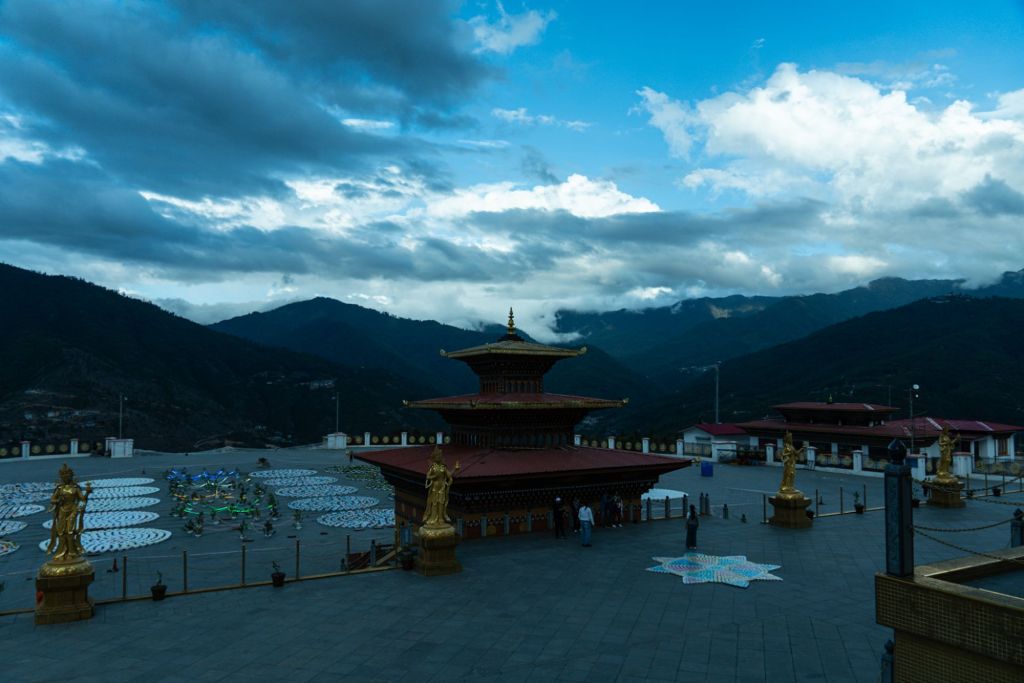
Prologue
In 2022, when I visited the Indian state of Sikkim, I started my journey from the small Bagdogra Airport. While on the road towards Gangtok, someone pointed towards some mountains and told me it was Bhutan. The thought of going there immediately crossed my mind. I said to myself, “I will be back” (in Arnold Schwarzenegger’s Terminator tone!). Little did I know that I would be back in a year and a half to visit this beautiful country.
In pursuit of happiness!
Just like my other vacations I ended up flying sleepless to Bagdogra from Bengaluru T1 by taking an early morning flight. I reached the airport to meet my trip leader. We recollected our Arunachal Pradesh trip and the GGs while we waited for the rest of the pack to arrive from different parts of the country. To my surprise, there were 3 other fellow Kannadigas on the trip! We waited till 1pm and started our journey towards Jaigaon, the border town which is a 3-4hr drive from Bagdogra in 3 different cars. We stopped for lunch outside Siliguri and introduced one another. The drive was melodious thanks to our front seater Vivek!

Our tea break was far more eventful while we discovered the game our fellow travelers from the famed CAB NO.2 were playing which involved guessing the movie based on first letters of Actor names and the film. Mind you, this game went on till the last day until we reached back this airport. While 2 cars were on gunning towards our destination, the third all girls cab was enjoying and travelling at their own pace stopping and falling by for reels. Their cab driver definitely experienced what it is like to be SRK for a day!
We arrived to the border town of Jaigaon & met our Bhutanese guide Kel from where we have to cross the border by foot passing via SSB & Bhutan checkpost to enter the city of Phuentsholing. I have crossed 10 borders while travelling across Europe but never felt the change of country so starkly! The Indian side was filled with people and chaos and the moment you cross over to Bhutan it is completely silent! People do not speak while on streets, vehicles do not honk even when there is a traffic jam. The streets are squeaky clean.
We checked into our hotel and later went out for dinner and a night walk. I visited the Zangopetri temple while on walk. We feasted on the Bhutanese dish of Ema Datchi for dinner. I called the night as my sweet sleep needed addressing over spending the night playing games which I did for the upcoming nights for the rest of the trips.
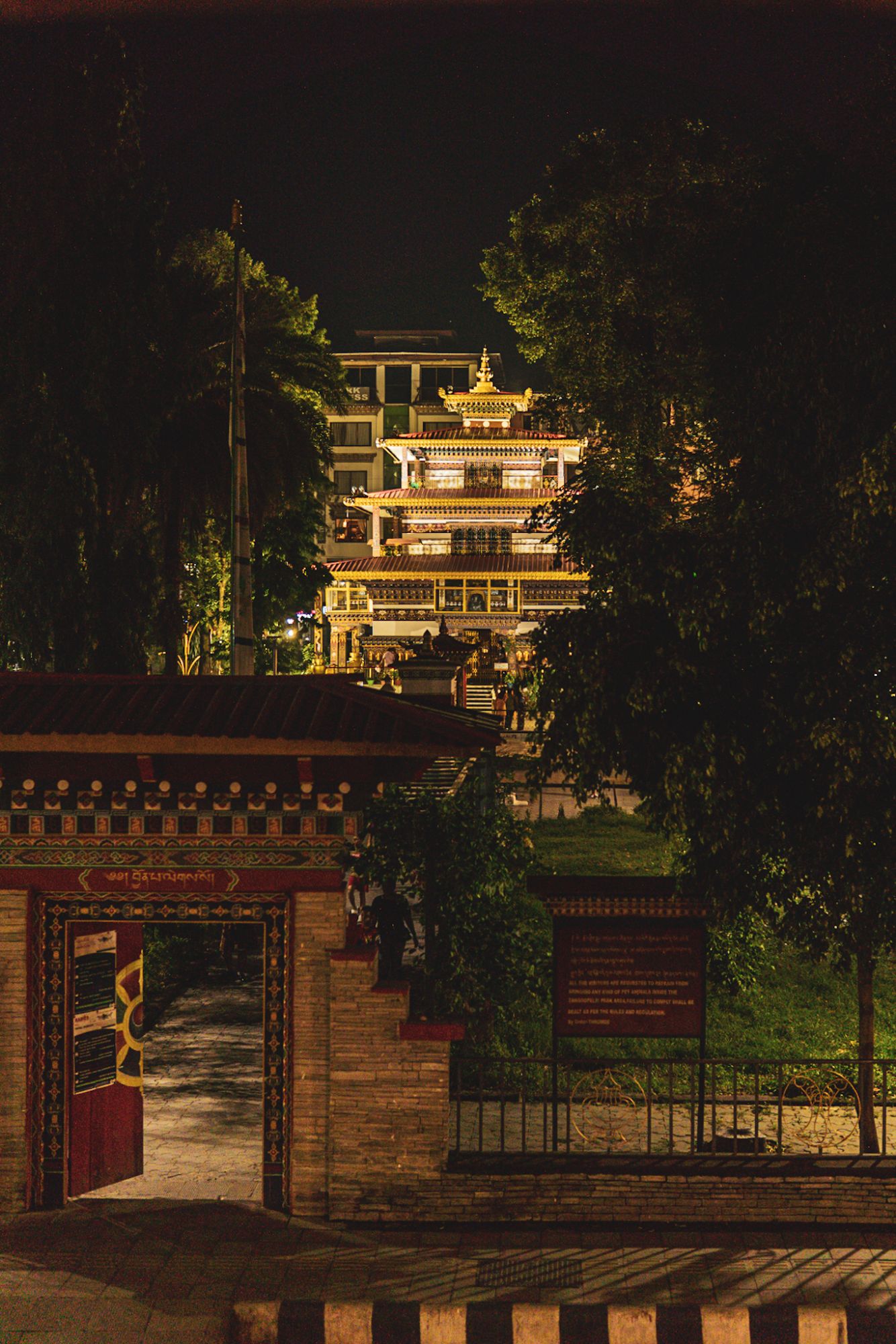
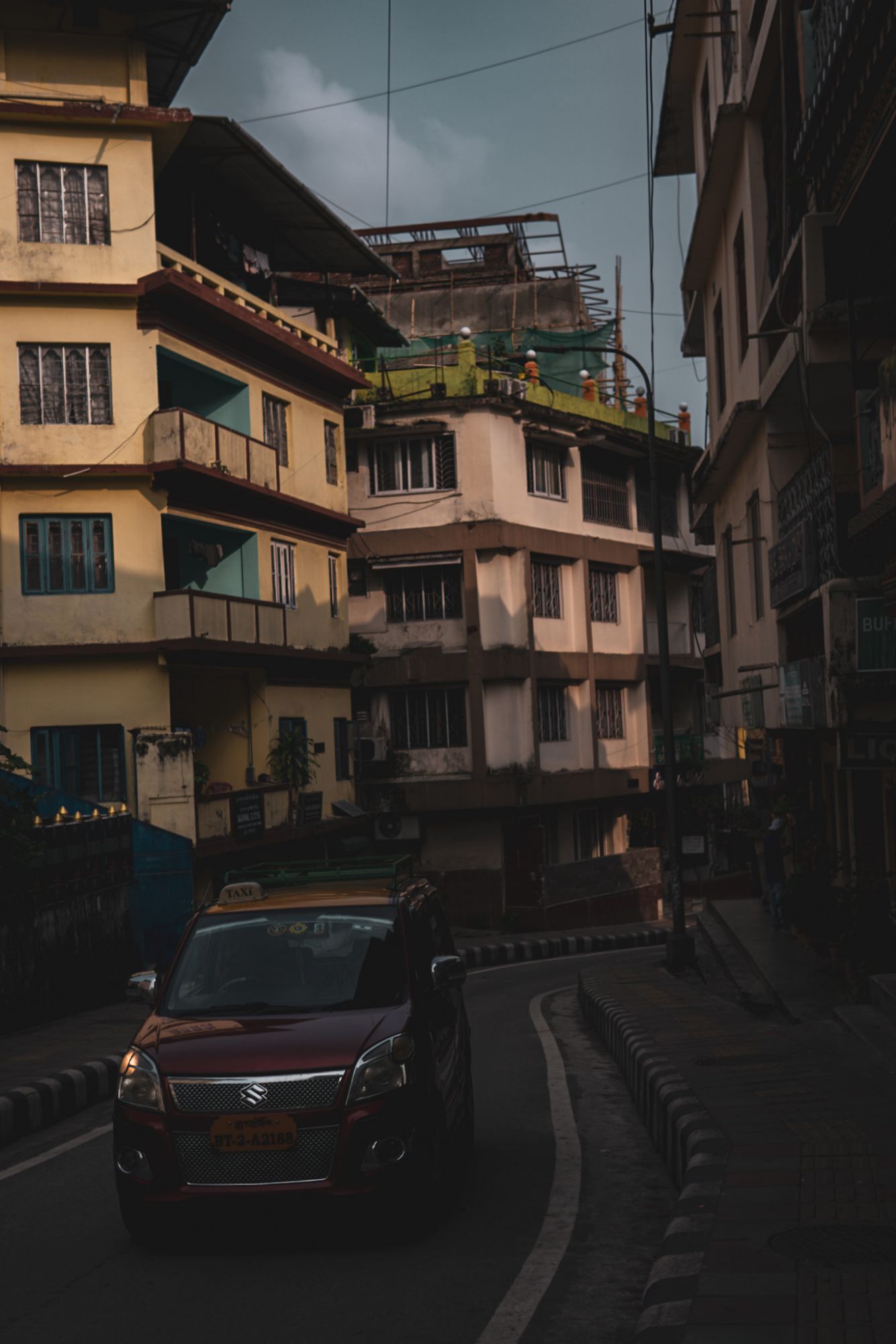
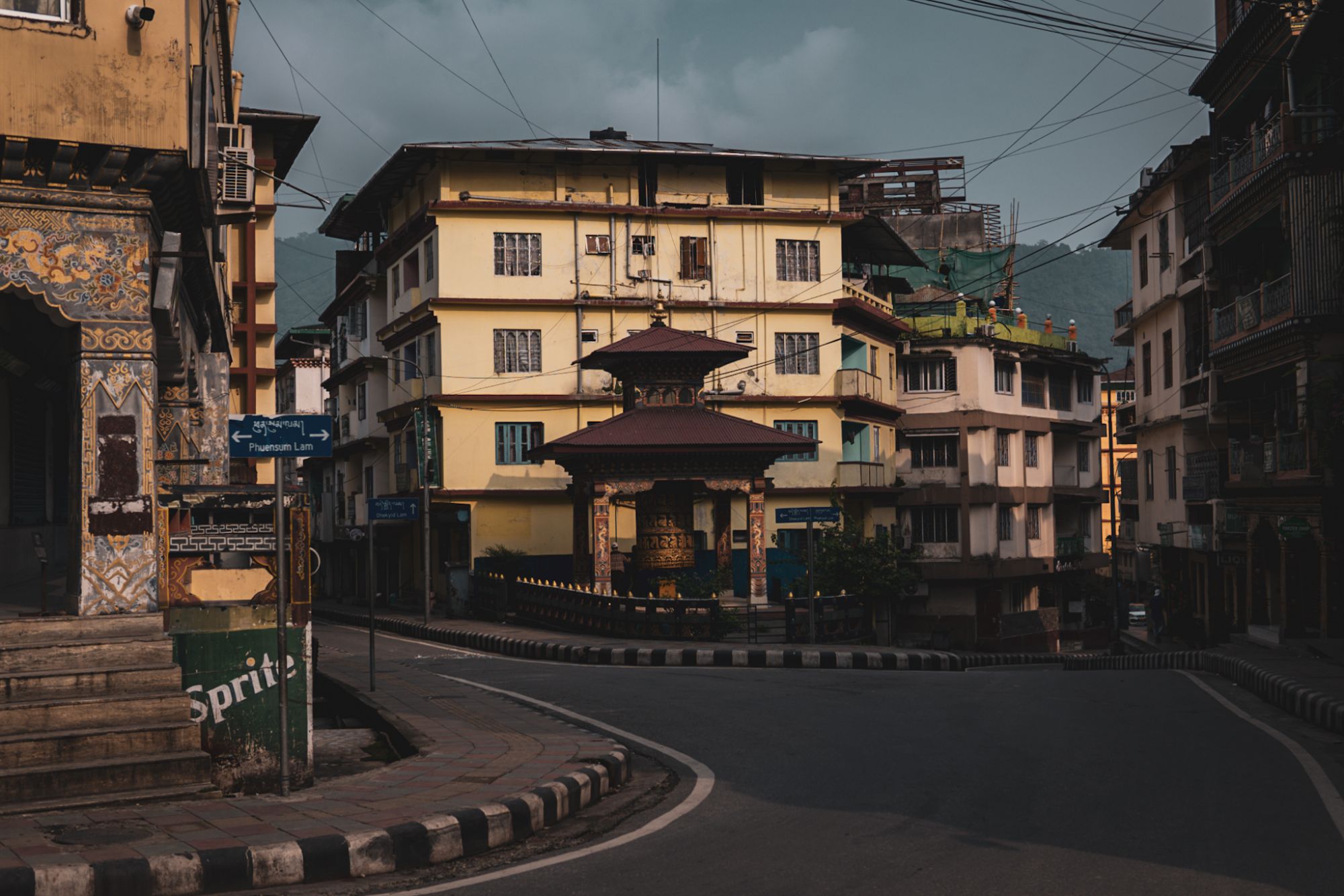

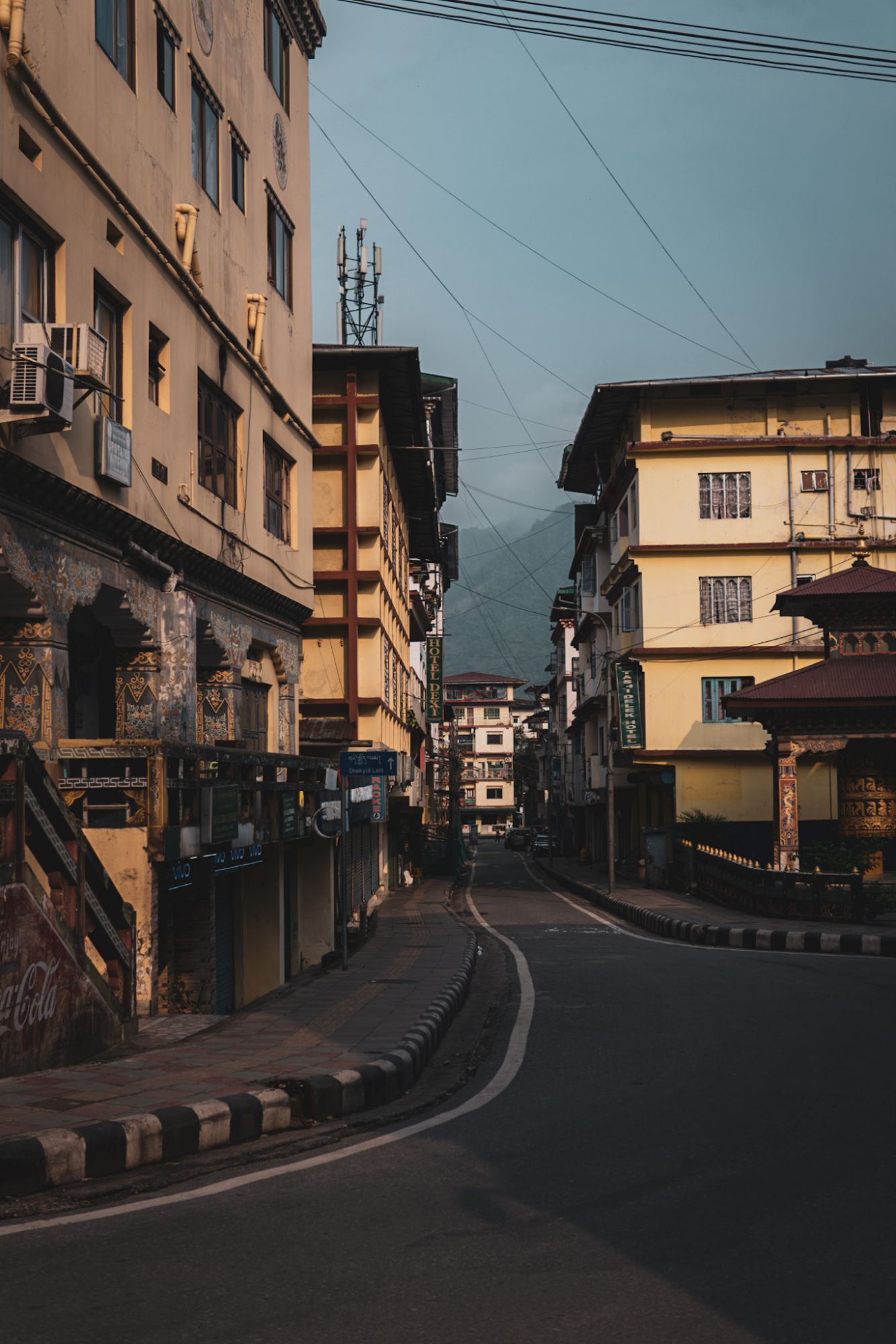
Phuentsholing
Immigrating to Bhutan:
The next morning, we went to the immigration office to complete our immigration process and get our passports stamped to enter mainland Bhutan. One can visit Phuentsholing with a voter ID without needing a passport or permit. The Bhutanese government believes in sustainable tourism, wanting tourists genuinely interested in exploring their country. To enter and stay in Bhutan, Indians need a permit, which can be stamped on your passport or provided as a printed permit letter if you have a voter ID. Bhutan charges a Sustainable Development Fee (SDF) on a per-day basis: INR 1,200 per person per day for Indians and USD 100 for other nationals.
Every tourist must have a guide with them at all times, regardless of nationality. Outside vehicles must pay additional taxes to enter Bhutan: INR 2,000/day for bikes and INR 4,500/day for cars. Guide charges are INR 2,000/day, and cabs start from INR 3,000/day. This was not mandatory for Indians before October 2019. An incident involving a tourist from Maharashtra climbing one of the stupas at Dochula Pass led to these rules being imposed. I appreciate this move because it has helped Bhutan remain calm and soothing compared to the bustling tourist destinations in North India.


Kel & Tashi ata
A short introduction about Bhutan before we continue…
Bhutan is a small, landlocked country nestled between two Asian giants, India and China. The documented history of Bhutan dates back to the 7th century AD when Buddhism began to spread in the region. Until the 16th century, Bhutan was ruled by various tribes and regional rulers. It was unified by Zhabdrung Ngawang Namgyal, a Buddhist monk from Tibet, in the early 17th century. He defended Bhutan from Tibetan attacks and was such a formidable leader that his death had to be hidden for 54 years to protect ancient Buddhist relics from Tibet. He is worshipped across Bhutan for his contributions.
Bhutan follows the Vajrayana school of Buddhism and reveres the second Buddha, Padmasambhava (Guru Rinpoche). It is said that Tibet’s decline resulted from rejecting Guru Rinpoche’s teachings. Until 2008, Bhutan was a monarchy with a king and an abbot (religious head). However, Jigme Singye Wangchuck, the then ruler, decided to give power to the people. Today, Bhutan is a constitutional monarchy where the king and the abbot remain heads of state, but there is also a prime minister who heads the government and an elected parliament.
Bhutan has been and continues to be a protectorate of India. The country is highly reliant on India for almost everything. Until Bhutan was recognized internationally, India was responsible for managing its foreign affairs. Bhutan affectionately refers to India as a “Big Brother.”
The current King of Bhutan, Jigme Khesar Namgyel Wangchuck (not Jigme Singye Wangchuck, who is his father), studied in India and has a deep fondness for the country. Bhutanese airspace is guarded by the Indian Air Force, ensuring the security of this Himalayan nation. Additionally, India regularly trains the Bhutanese army, both soldiers and officers, and Bhutanese citizens can join India’s armed forces, police, and civil services.
The actual journey begins…
We waited for our guide Kel to finish our immigration process and buy local SIM cards as Indian SIMs do not work. Airtel requires roaming plans to function, but local SIMs are economical and have good network coverage in Bhutan. Indian Rupees (INR) are accepted everywhere in Bhutan. Sometimes, the change is returned in local currency, Bhutanese Ngultrum, which has the same value as the rupee.
We visited a café to cool down as it was still very humid. Everyone was in a laid-back mode, and we finally started our journey towards the capital city of Thimphu. It was almost a 7-hour scenic drive that reminded me why I love the mountains. We stopped at a Stupa before we headed for lunch halfway at a restaurant built over a cliff and enjoyed a vegetarian Bhutanese Thali.

Tibetan style Stupas depicting 8 important stages of Gautama Buddha’s life

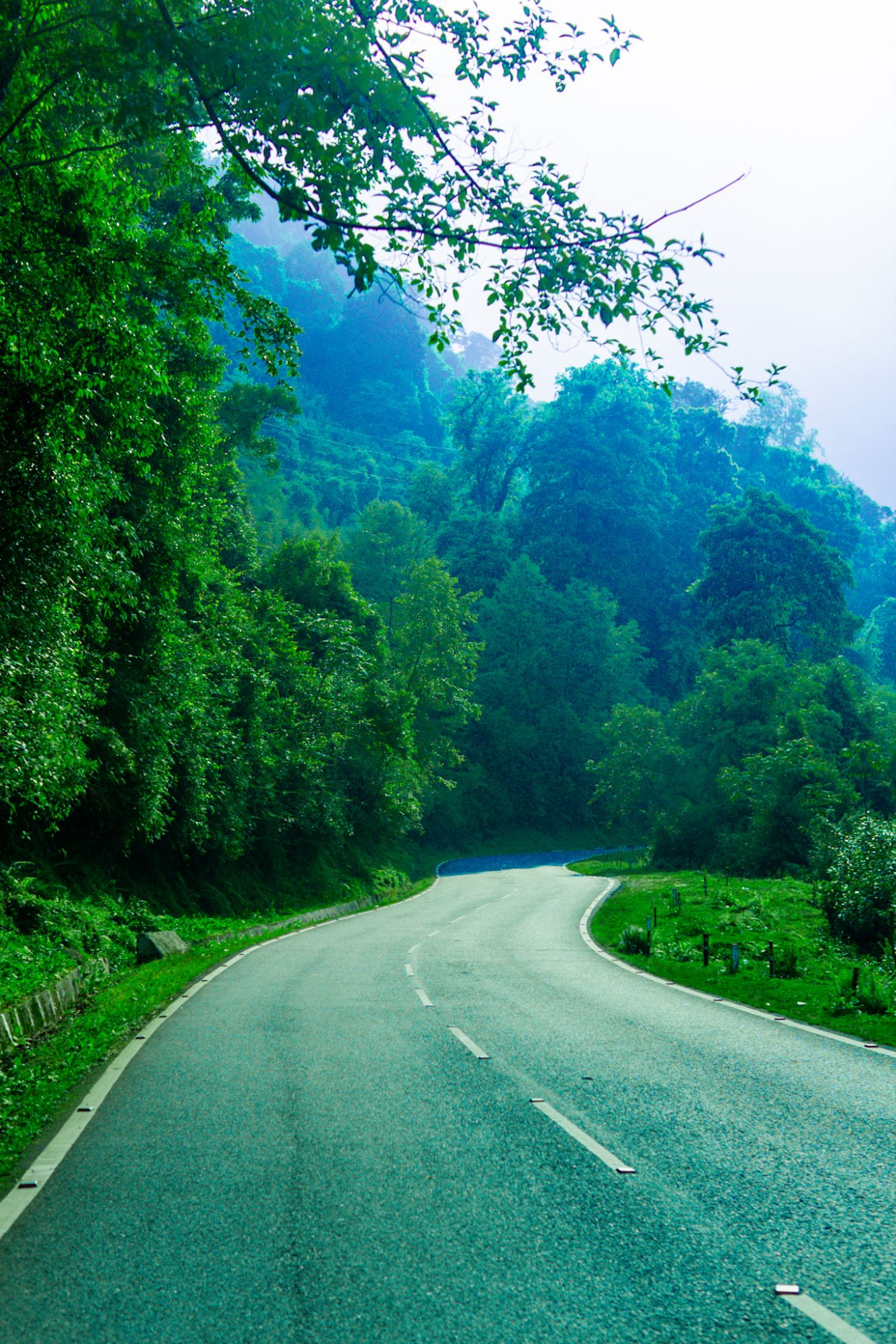

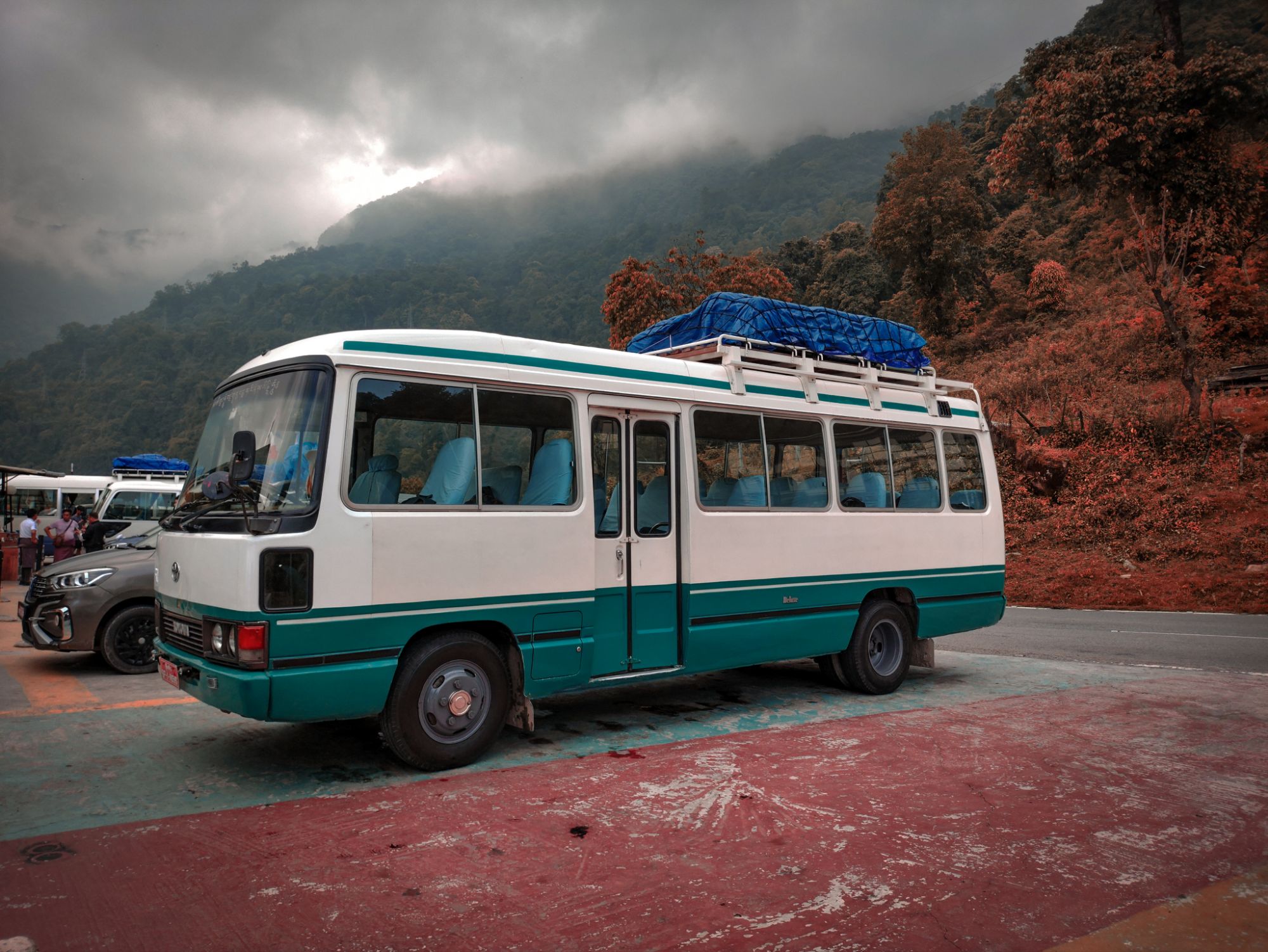

Vibing along!
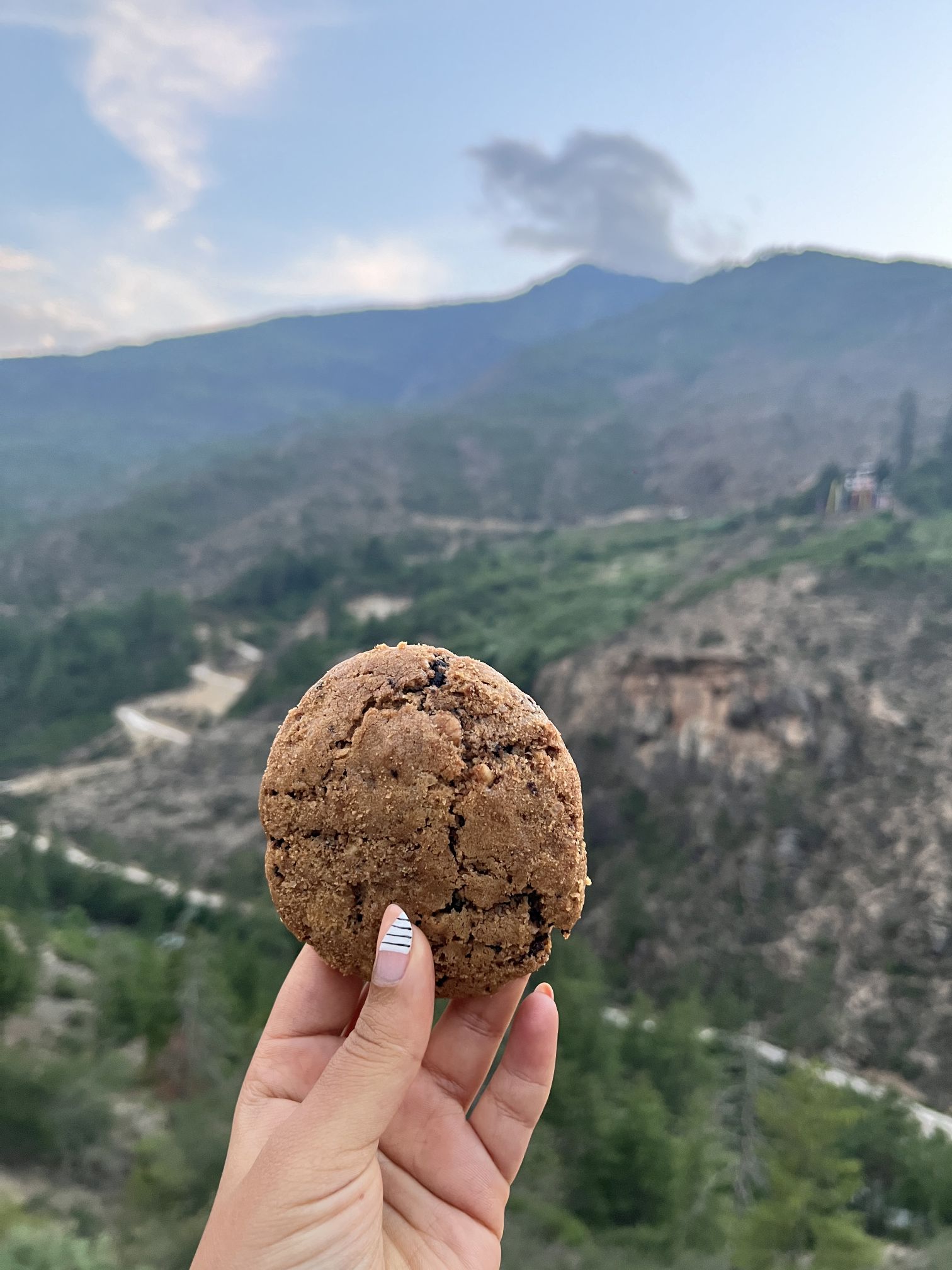
We continued towards Thimphu, stopping for a coffee break where we enjoyed cappuccinos and an assortment of cookies. The café owner had almost closed for the day, but we ended up giving her probably a day’s worth of business, and it was definitely worth it! It is a small stall 30 km outside Thimphu where the road diverts towards Paro.


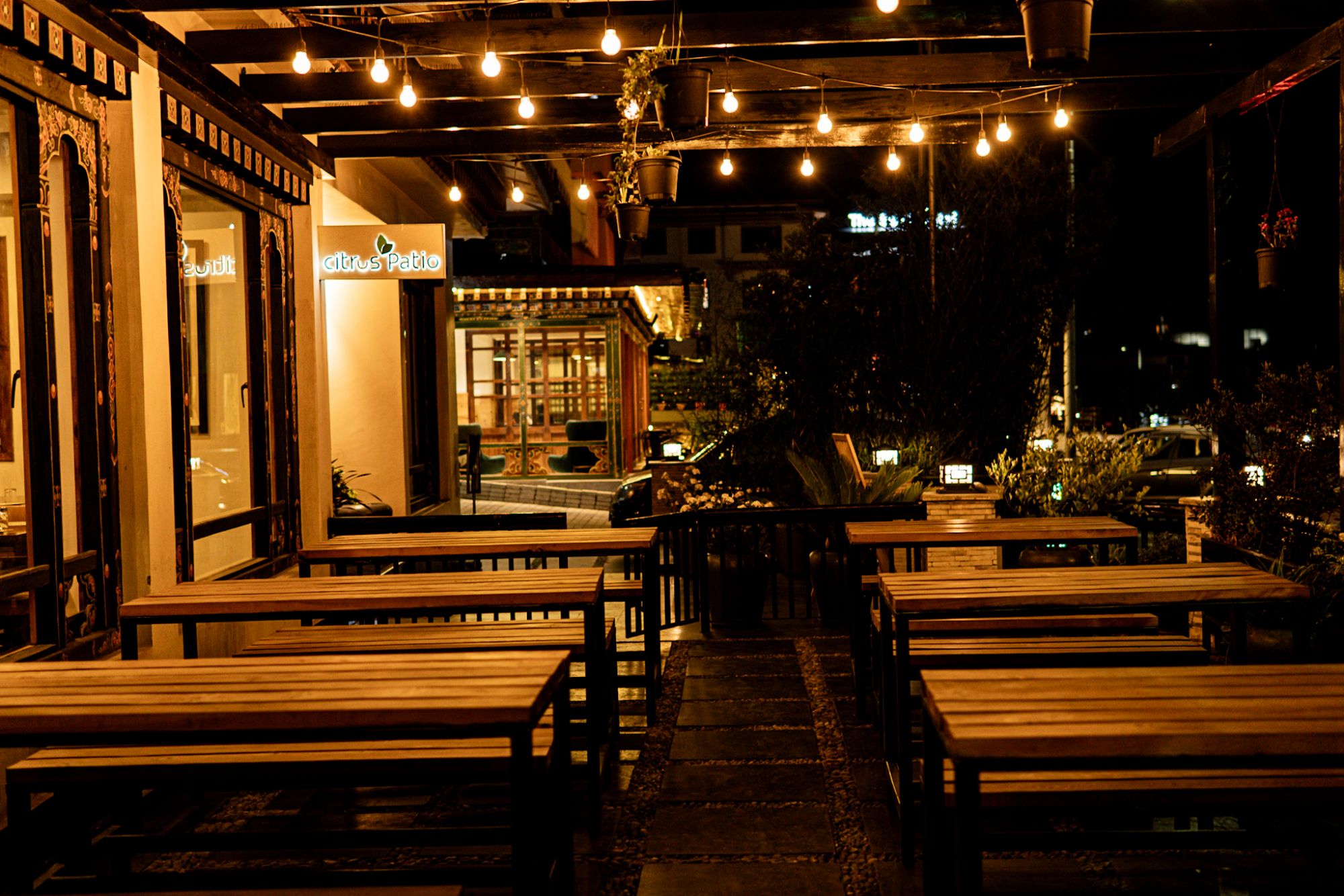
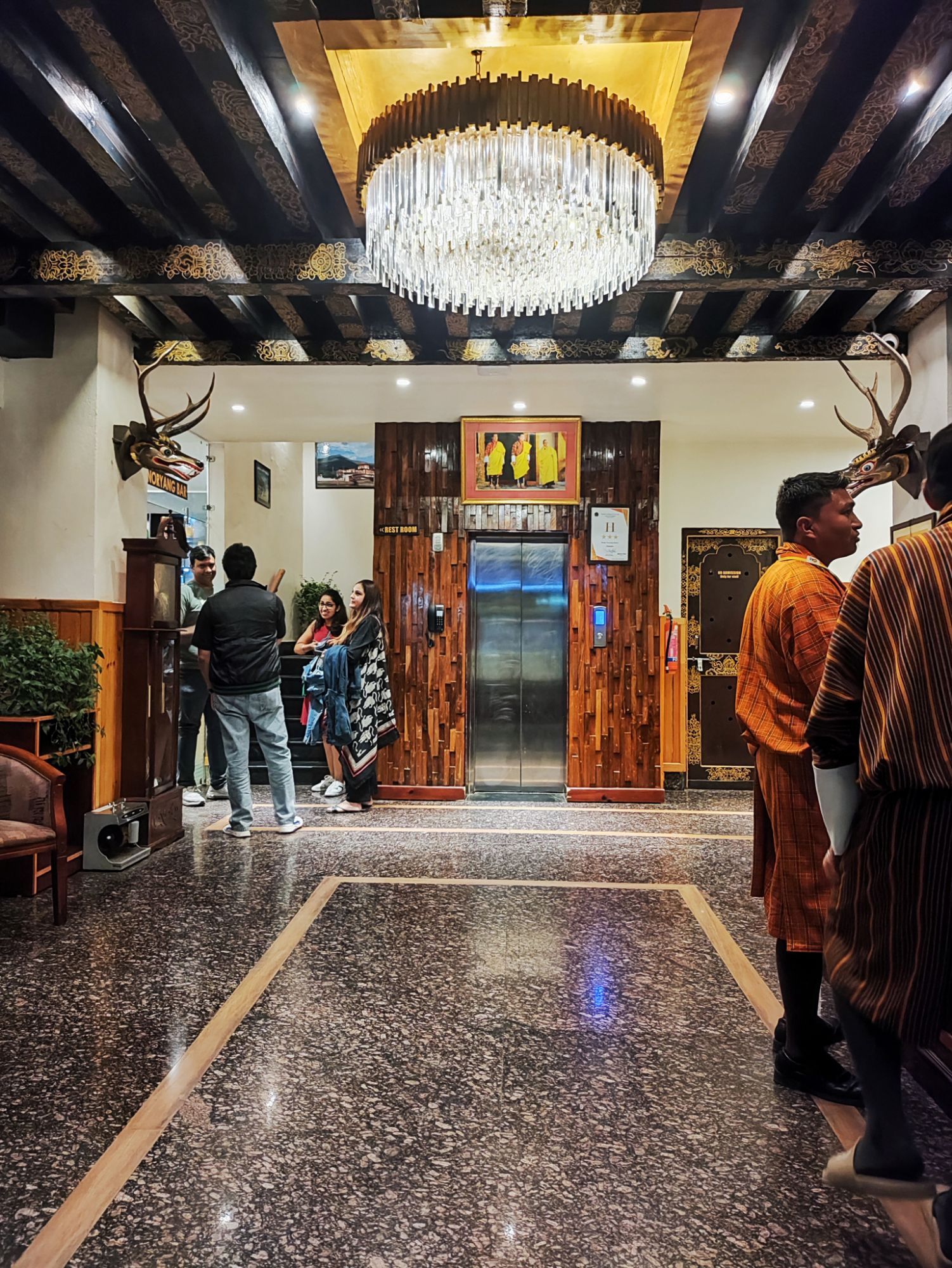
We reached Thimphu by 7 PM and headed out to explore the market and have dinner. We ended up in a karaoke bar and sang our hearts out until 1 AM before crashing into our beds at the hotel.
Exploring Thimphu
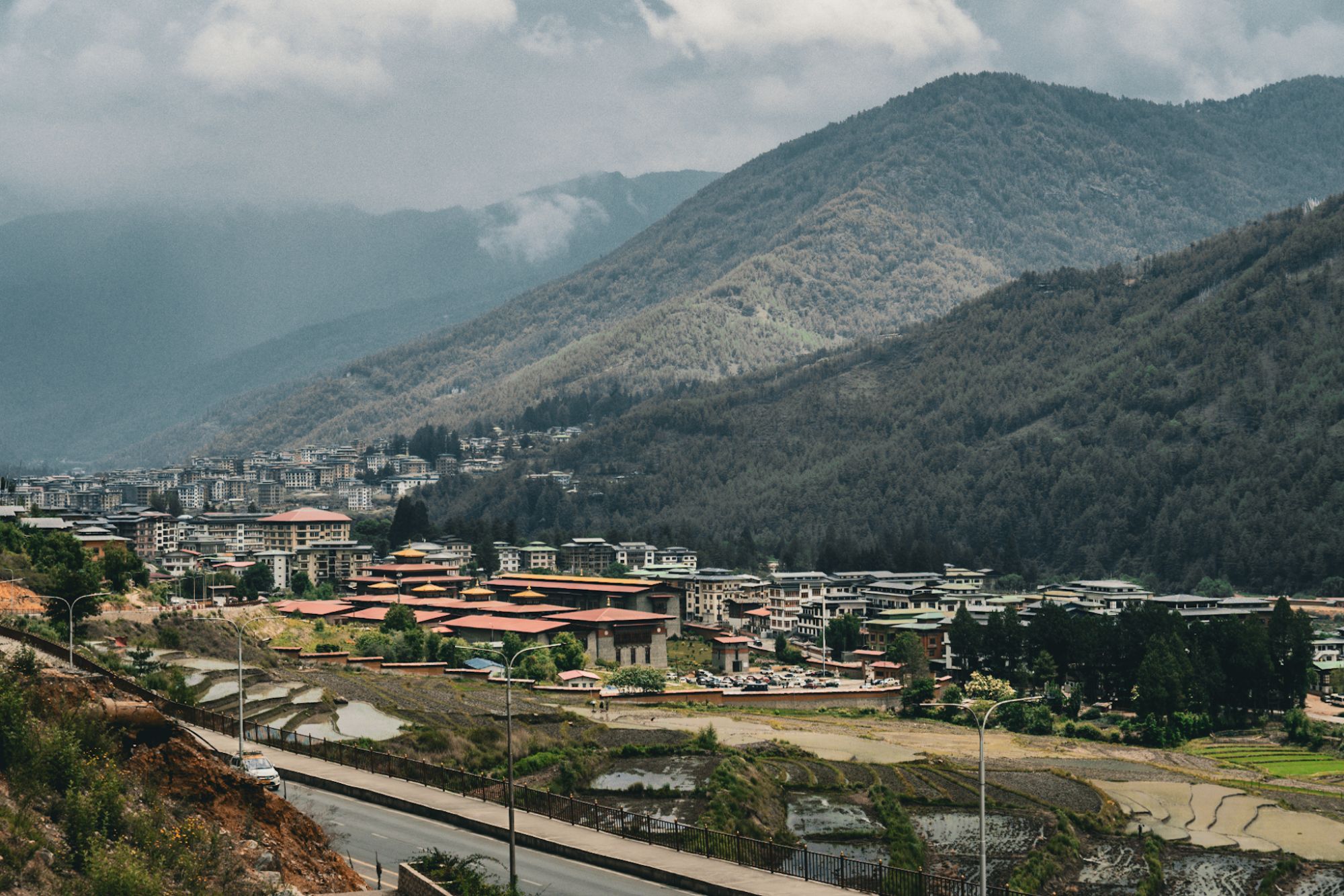
Thimphu, the capital city of Bhutan, is a modern settlement unlike most capital cities around the world. The monarchy moved its capital from Punakha to Thimphu in the 1960s. Before that, Thimphu was a small village. The reason for this move was the unbearable summer climate in Punakha. Thimphu is a modern city with approximately 10-15% of Bhutan’s population. It houses the Supreme Court, the King’s Palace, and the administrative building within a fort called a Dzong.
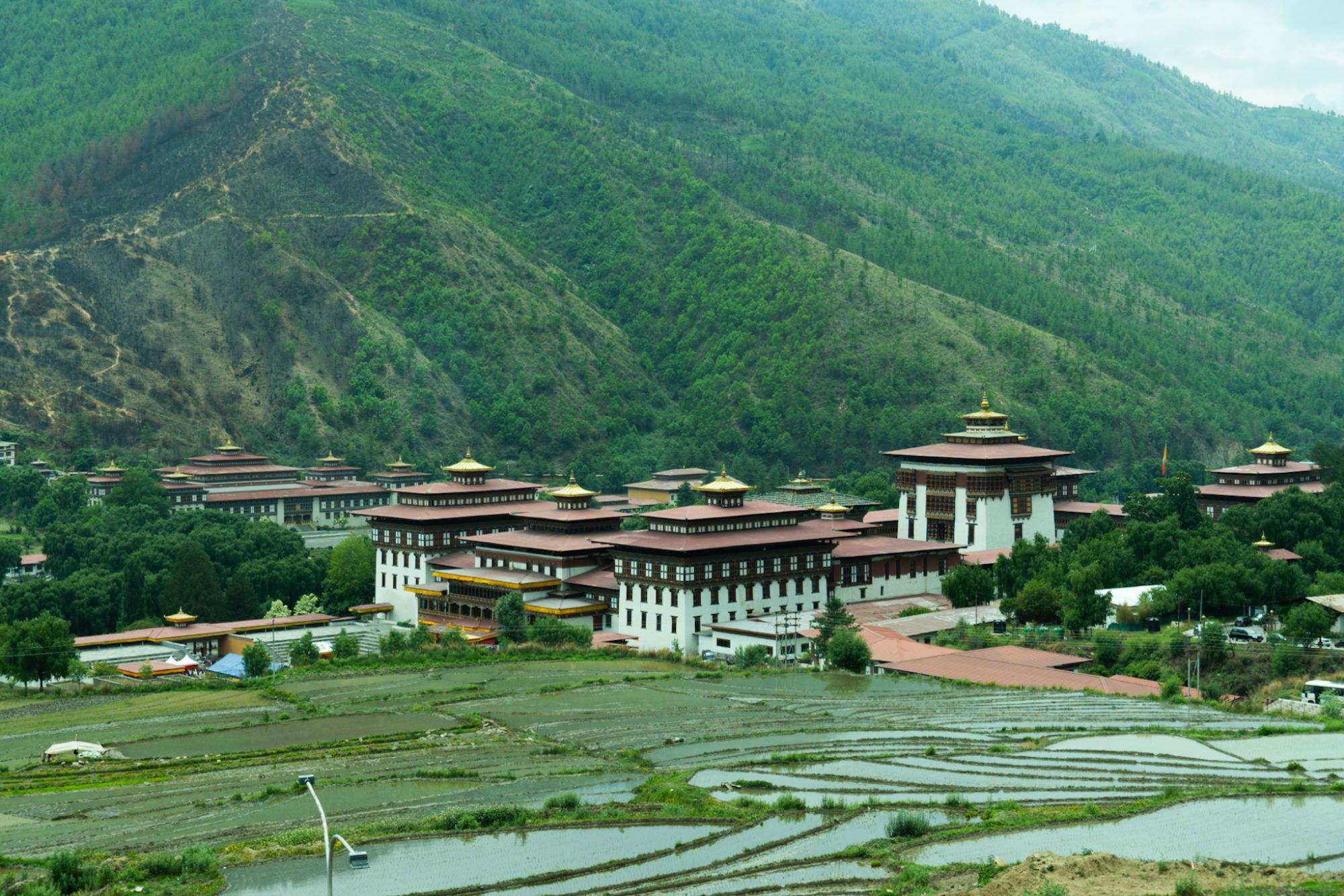
Dzong & the Supreme court complex, Thimphu Bhutan

After viewing the buildings from a distance, we headed to the Royal Takin Preserve, where the national animal of Bhutan, a Takin, is nursed and cared for when injured or ill in the wild. A Takin is a cow with a goat’s head. Legend says that the famous madman monk created this creature out of the bones of a cow and a goat skull! It started raining in the national park, so we had to rush out.

We then visited Simply Bhutan, a place that depicts the culture, traditions, and lifestyle of Bhutan. The tour starts by welcoming guests with rice wine. One can see the weapons used by the Bhutanese, how their houses are constructed, what a typical Bhutanese household looks like, and their kitchen and front yard. You can also play their musical instruments and learn about their mask dance. Guests are treated to delicacies like butter tea, sweet rice, puffed rice, and a cultural dance performance. You can join the dance and try your luck at archery. If you hit the target, you get a cheering dance from the performers. There is also a wishing bowl where you can throw coins to make a wish.
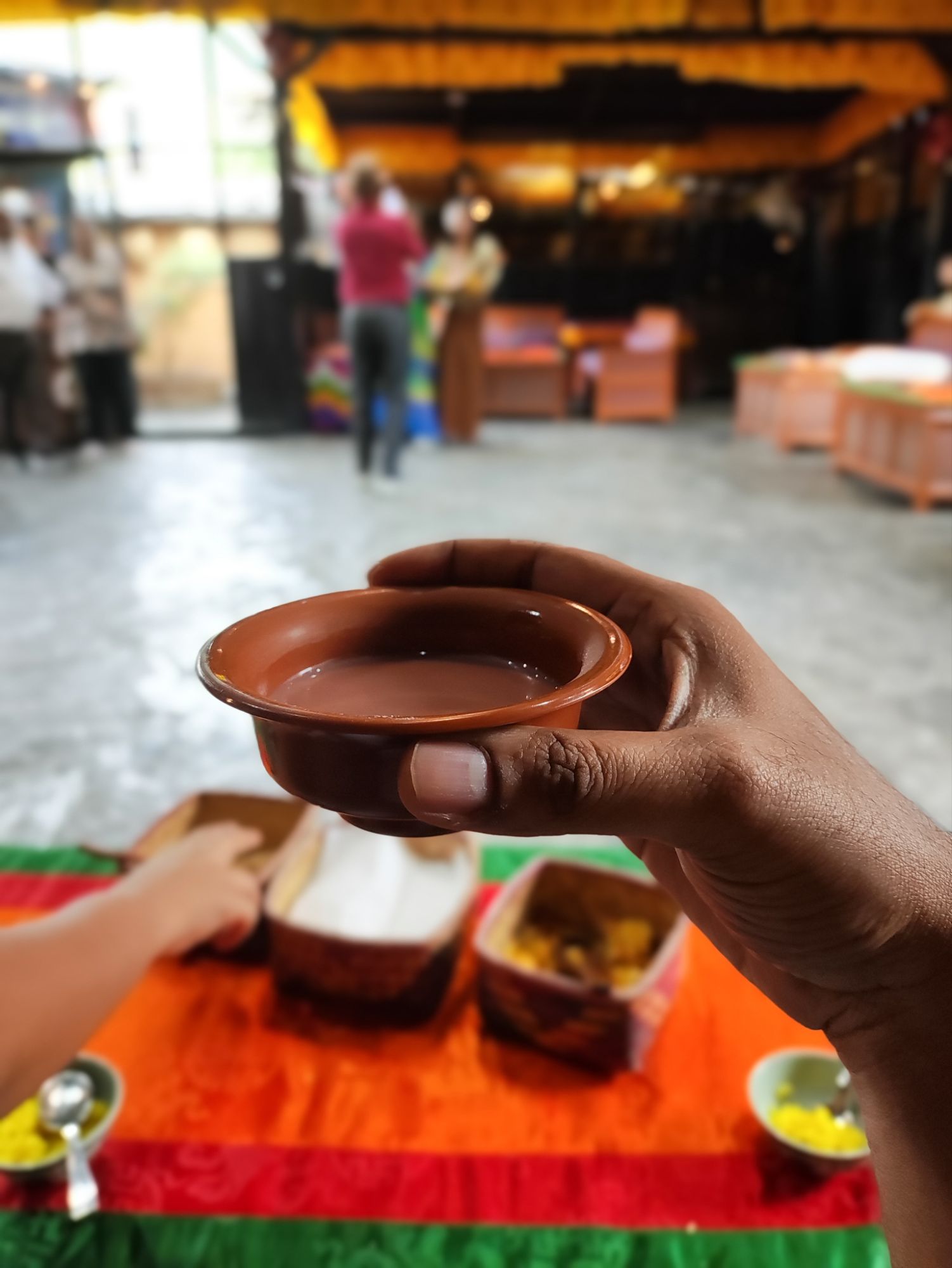

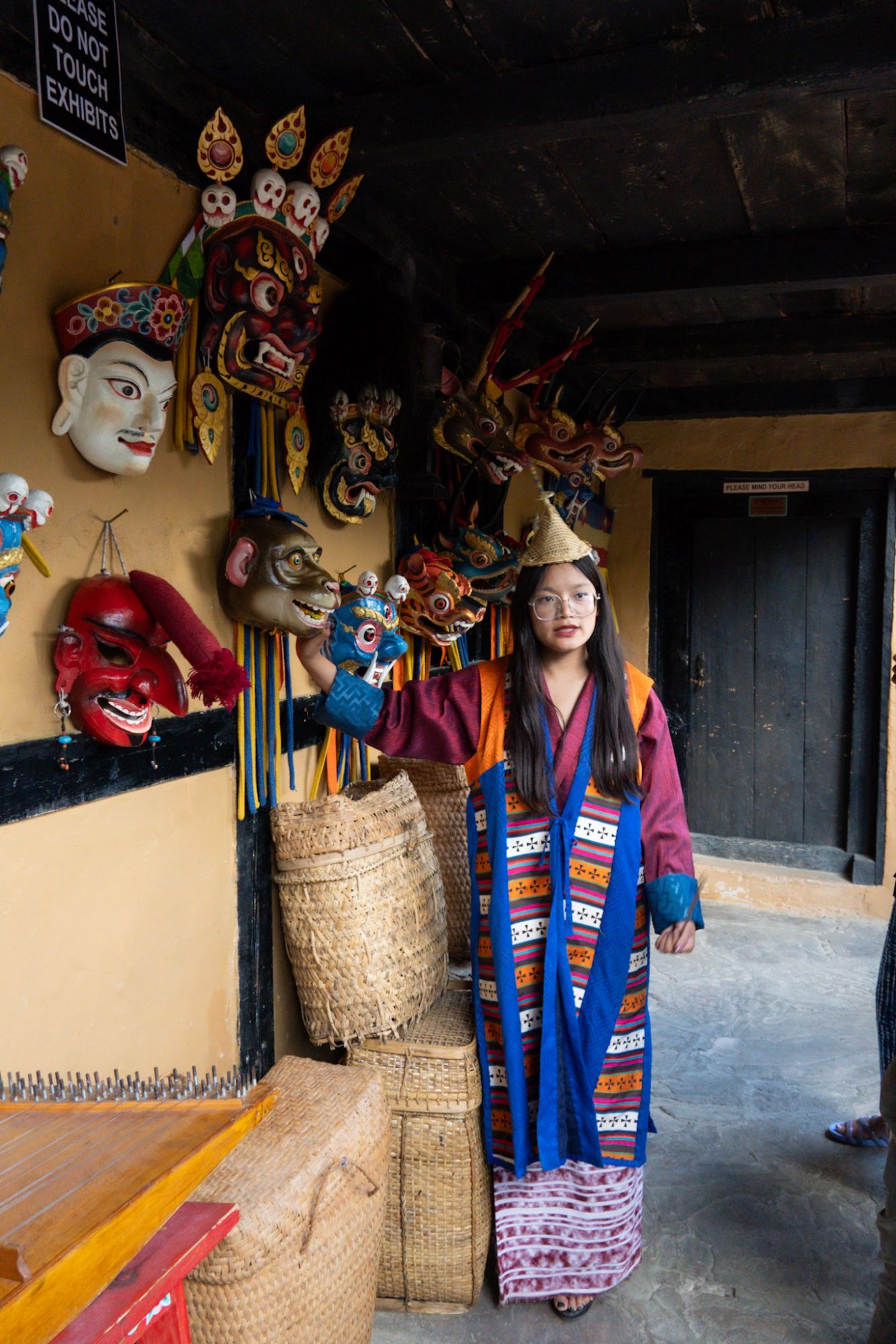
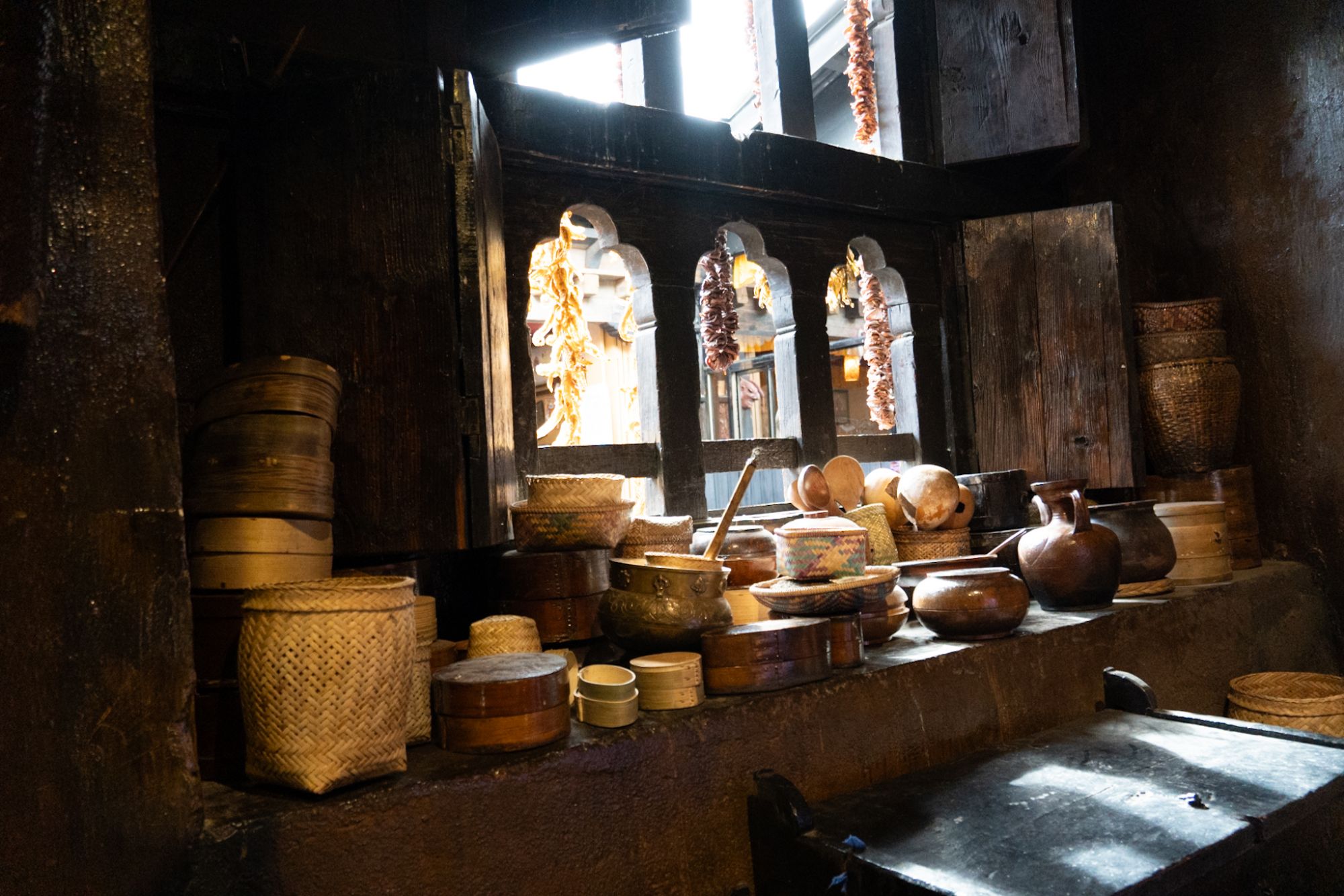
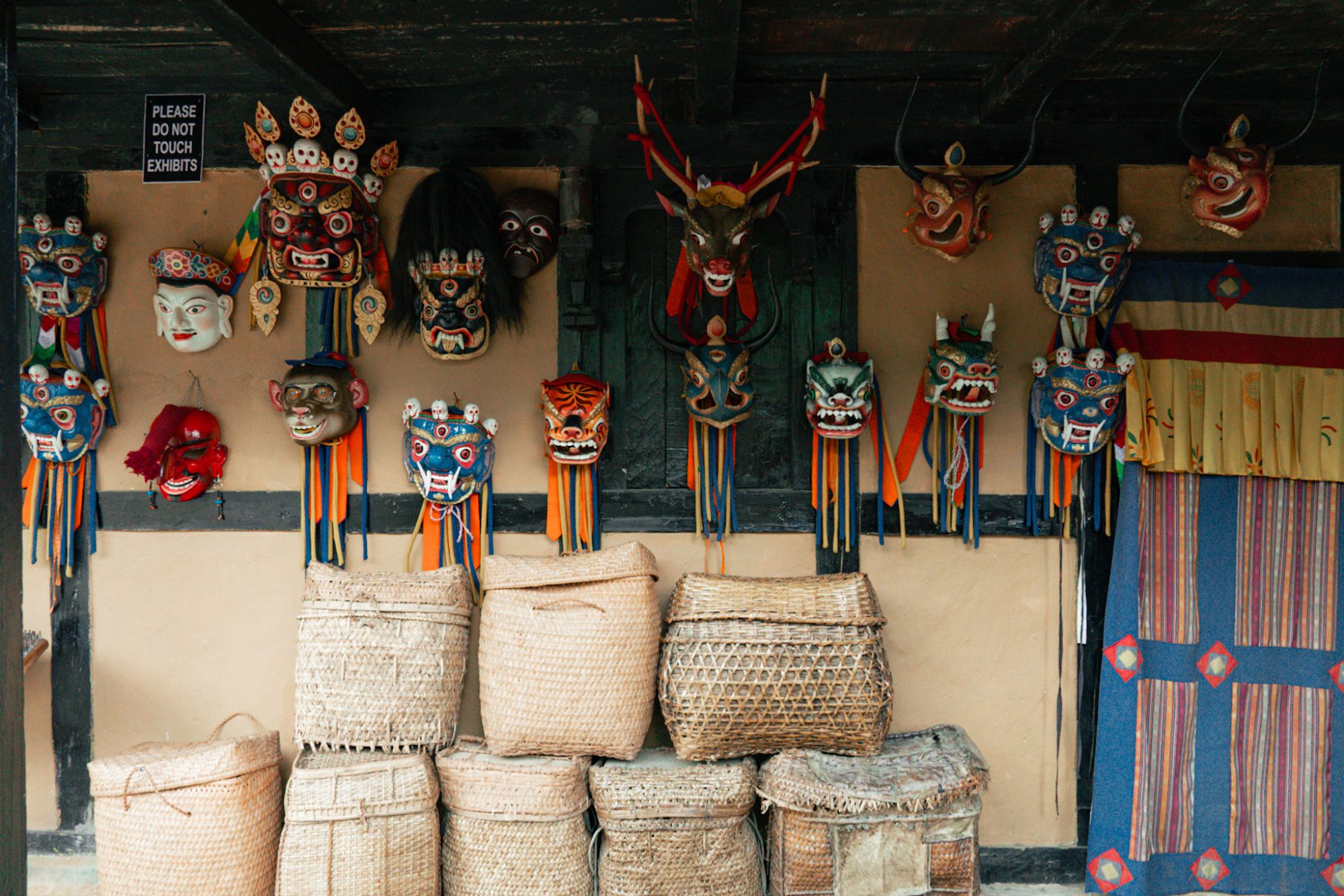

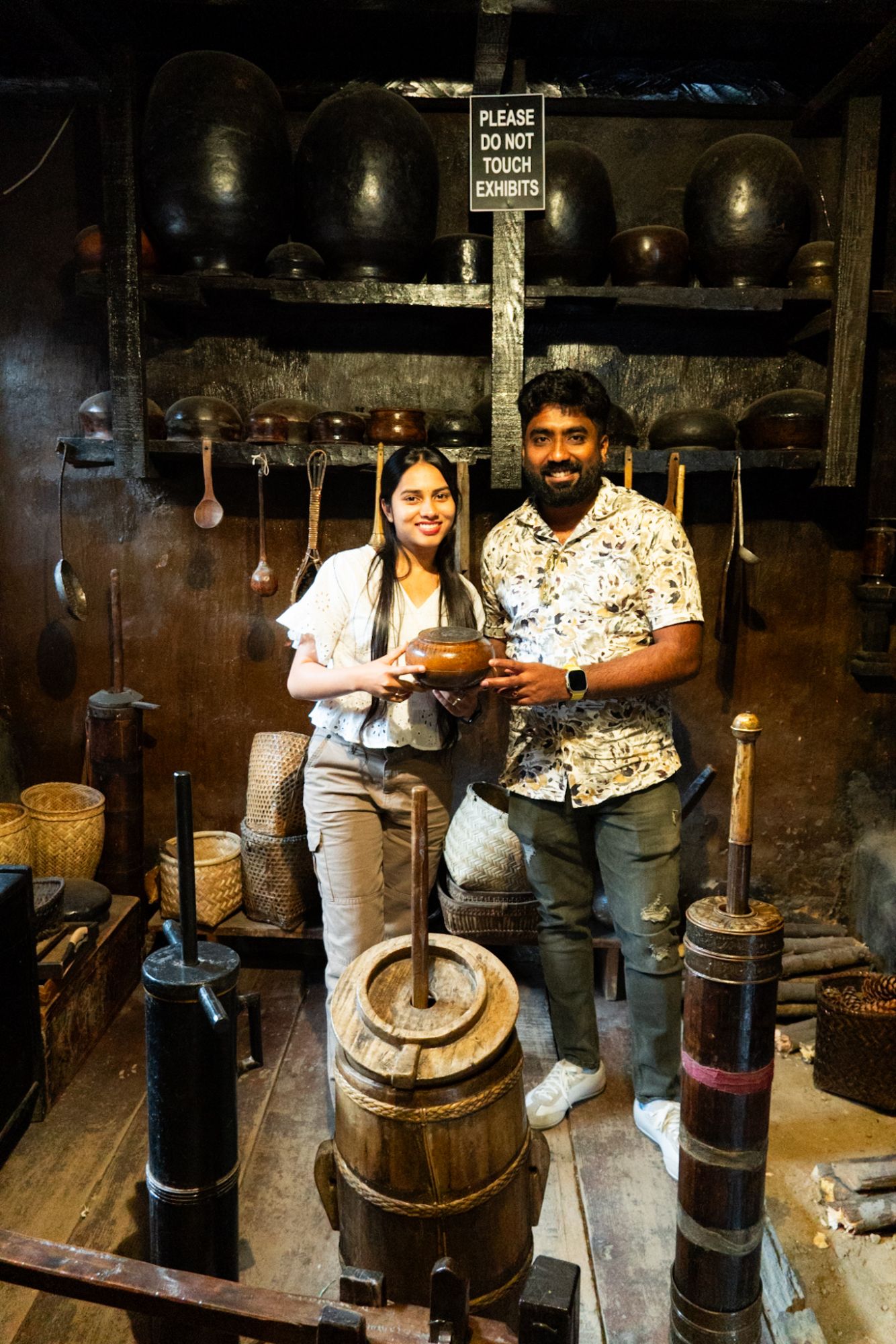
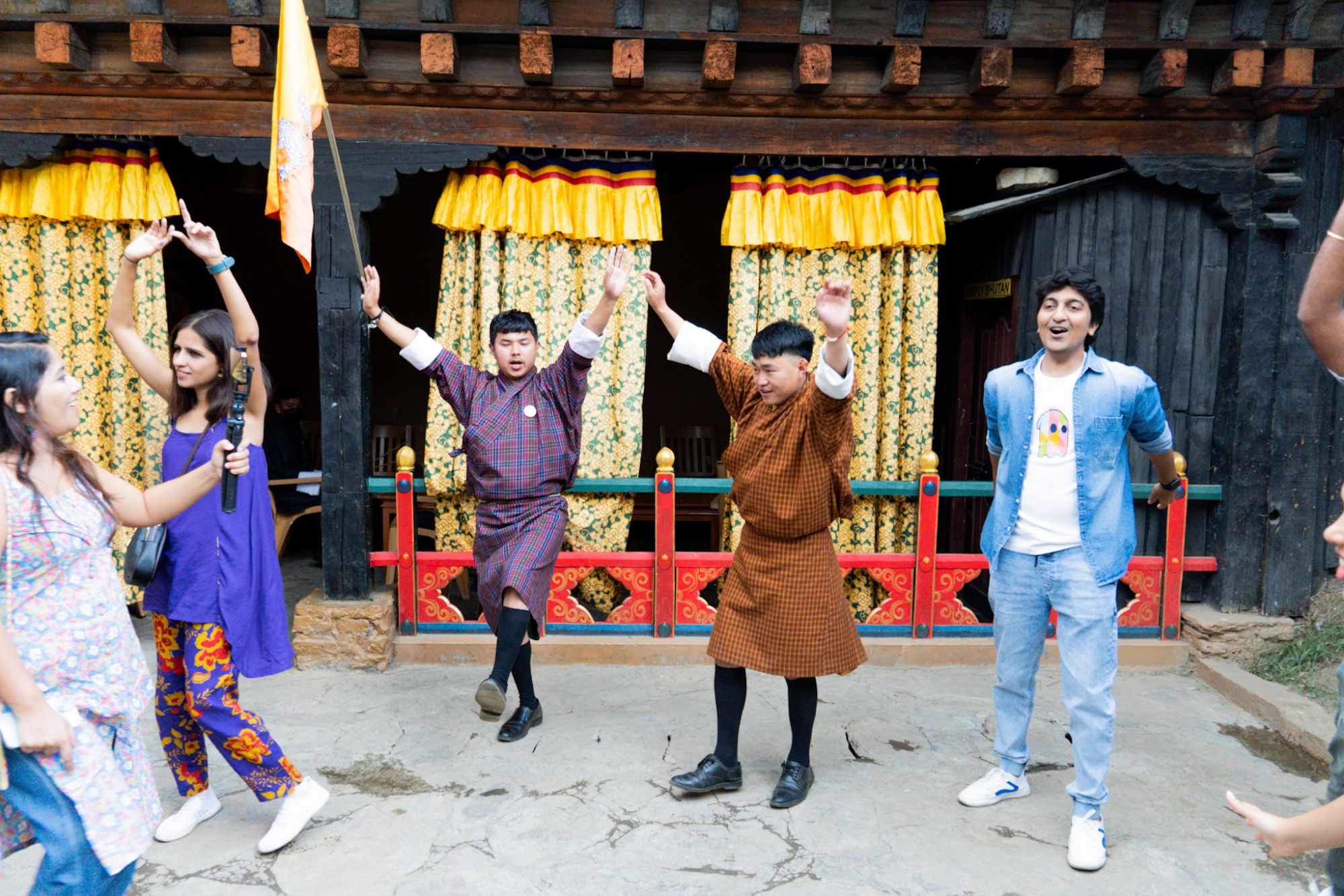
Simply wonderful Bhutan
After enjoying the simple yet culturally rich Bhutan, we headed to our last stop on the itinerary, The Buddha Dordenma. Built to commemorate the 60th birthday of the 4th King of Bhutan, the 54-meter tall statue of Buddha in Shakyamuni style overlooks the city of Thimphu. After spending time at the temple witnessing a special ceremony, we took some photos before heading back to explore the city market and have dinner.

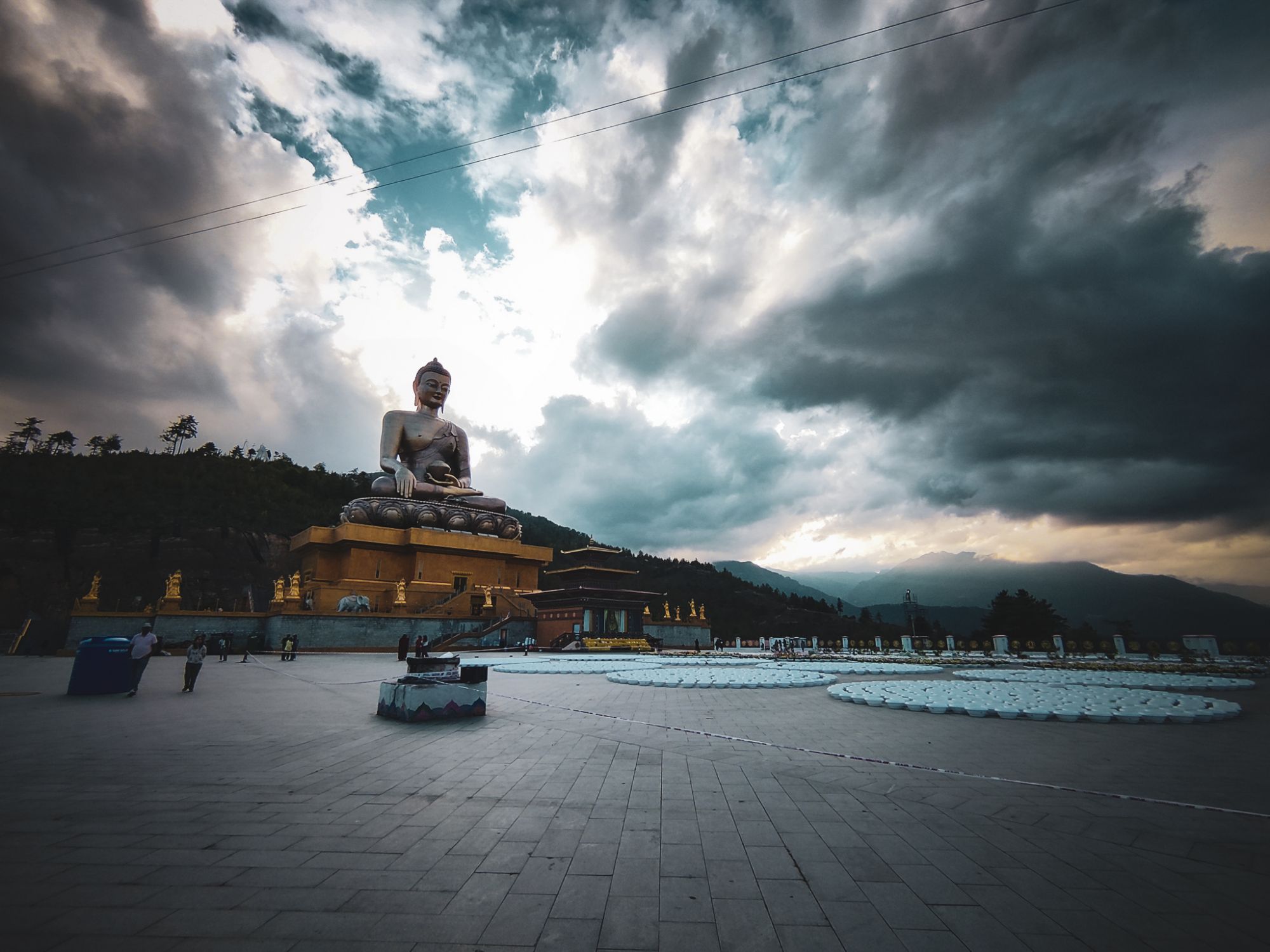


Our excursion in Thimphu ended, and we were planned to head to Punakha, the former capital of Bhutan, the next day.
Stay tuned for the next blog where we continue our journey!


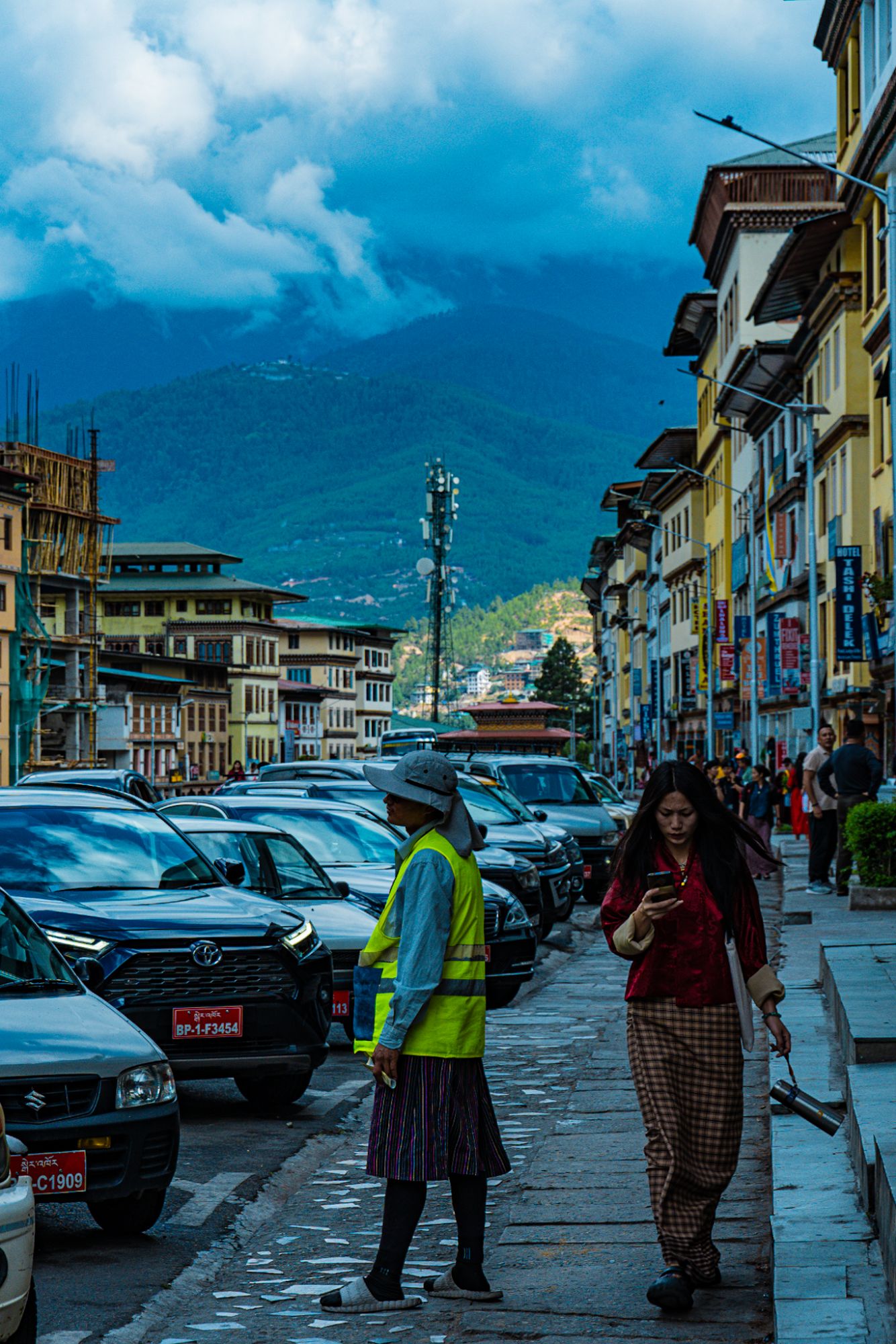
Strolling around Thimphu market


ZumZin (Peach wine) & hardened Yak cheese
Café, hotel & restaurant suggestions:
- Gadhen hotel – Phuentsholing
- Zen Restaurant – Phuentsholing (Yummy Bhutanese food!)
- Kizom Cafe – Phuentsholing
- Takeaway Bhutanese Boulangerie- 40 kms before Thimphu (Cookie stash!)
- White Dragon hotel-Thimphu
- Citrus cafe by Lemon tree-Thimphu
- The Musk Cafe-Thimphu (Pocket friendly+Yummy food!)
- Ambient Cafe-Thimphu (Make sure they get your order right!)
- New Grand hotel & restaurant– Thimphu (Pure veg)
 A Million Moments
Leave a comment